

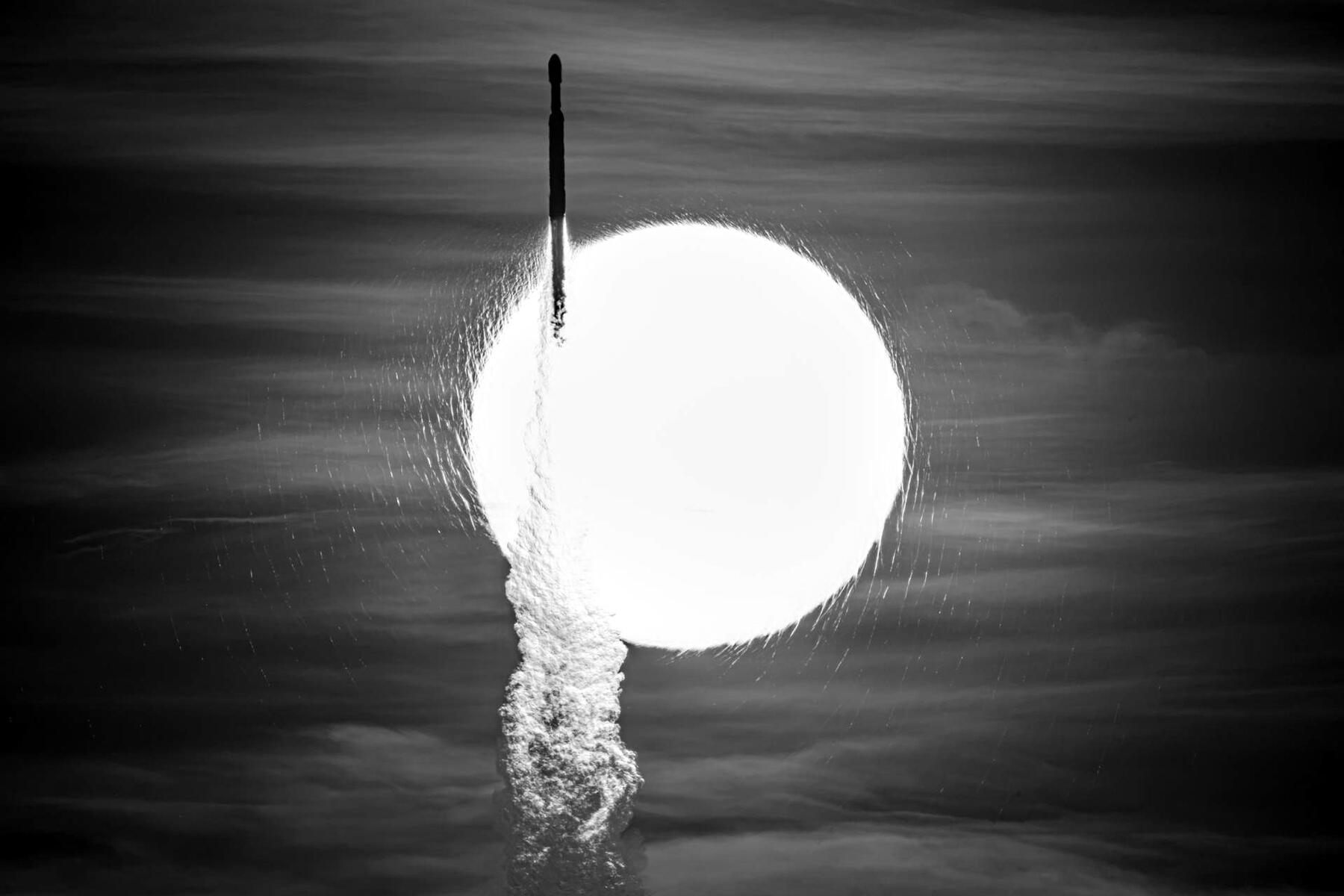
A new space telescope left Florida on Sunday morning with an unusually big assignment: survey huge stretches of the sky fast enough to help scientists study dark matter, dark energy, and planets beyond our solar system. NASA’s Nancy Grace Roman Space Telescope launched at 7:26 a.m. Eastern time aboard a SpaceX Falcon Heavy from Kennedy Space Center.
NASA said its ground team began receiving telemetry seven minutes after launch. The rocket separated from Roman 31 minutes into flight, and the observatory’s solar panels and lower instrument sun shade deployed successfully an hour and 23 minutes after liftoff. Those are important early checks, not the end of the work.
A wider look at the universe
Roman combines infrared vision with a field of view far larger than Hubble’s. NASA says the telescope is designed to survey the universe about 1,000 times faster than Hubble. Its 300-megapixel Wide Field Instrument will collect broad cosmic panoramas that researchers can use to study how galaxies and large-scale structures have changed over time.
The mission also carries a coronagraph, a technology demonstration built to block a star’s glare and photograph Jupiter-like planets around other stars. It is not designed to prove that life exists elsewhere. Its value is more practical: testing tools that could help future observatories look for smaller, more Earth-like worlds.
The celebration comes with a checklist
Roman is now beginning an approximately three-month, million-mile trip toward the second Sun-Earth Lagrange point, known as L2. More hardware deployments, course corrections, instrument activation, calibration, and commissioning remain. NASA’s mission page lists Roman as launched and describes a five-year primary mission, but scientific operations have not begun.
NASA currently anticipates releasing Roman’s first images in early 2027. That timing is a plan, not a promise. Space missions can encounter delays during travel and commissioning, and the agency will need to confirm that the observatory and its instruments perform as intended.
A public stream of discoveries
If commissioning goes well, Roman is expected to return about 1.4 terabytes of data each day. NASA says that would be the highest data rate yet for one of its astrophysics missions. The volume matters because the telescope is meant to catch both planned targets and unexpected events across wide areas of sky.
The hopeful part of Sunday’s launch is specific and already measurable: a decade-scale public science project reached space, established contact, and completed its first deployments. The discoveries are still ahead. For now, Roman is traveling toward the quiet vantage point where it can begin looking.