
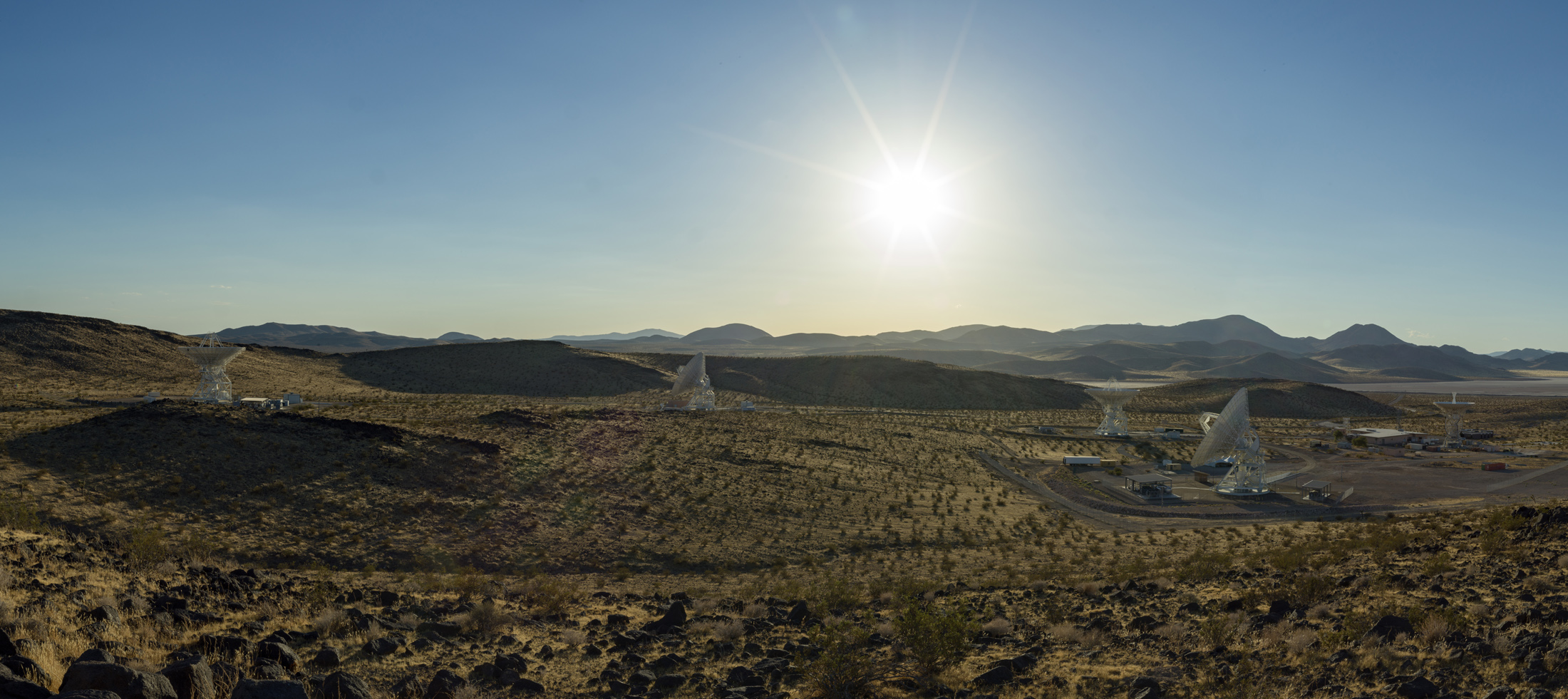
A new listener in the California desert
Robotic spacecraft can travel for years, but every command and measurement still has to cross the distance home. Near Barstow, California, a new 114-foot radio antenna has joined the system responsible for keeping many of those conversations alive.
NASA’s Jet Propulsion Laboratory says Deep Space Station 23 is operational at the Goldstone Deep Space Communications Complex. The 34-meter dish has already communicated with missions including Voyager 1, Juno, Psyche, and the Mars Reconnaissance Orbiter.
The antenna does not make those spacecraft faster or guarantee that every signal arrives. It adds capacity to a global network that must schedule communications across missions separated by very different distances, data needs, and conditions.
Why another dish matters
The Deep Space Network operates major complexes in California, Spain, and Australia so Earth’s rotation does not leave a distant spacecraft without a station facing the right part of the sky. Each site contributes antennas, transmitters, receivers, and teams that turn faint radio signals into usable mission data.
DSS-23 is a multifrequency beam-waveguide antenna, designed as part of a broader effort to modernize and expand that capacity. JPL’s public report says the network supports more than 40 active spacecraft, while NASA’s wider communication systems serve many more missions closer to Earth.
Numbers around space communications can be easy to blur. The responsible claim is that DSS-23 is a completed, operating addition to the Deep Space Network at Goldstone. It is not a new spacecraft, and its construction alone does not determine the success of any mission it supports.
Infrastructure behind the discoveries
The photographs are dramatic, but the good news is mostly invisible: additional scheduling room, modern equipment, and another path for commands and science data. Discoveries arrive in headlines; infrastructure makes it possible for the questions, measurements, and course corrections to continue between them.
DSS-23 is already doing that work. Its value will be measured over years of ordinary contacts with spacecraft that depend on Earth listening at the right time, on the right frequency, with equipment precise enough to hear a message from very far away.