Robin Williams died on August 11, 2014, at age 63. The performances remain vivid because his speed never felt sealed off from other people. Whether he was improvising, playing a teacher, voicing a genie, or finding quiet inside a dramatic role, his attention seemed to travel outward.
Comedy as a shared current
Williams could produce an impossible number of voices and ideas in a minute, but virtuosity was only part of the effect. He listened. Scenes accelerated because he responded to the person in front of him, and audiences felt included in the exchange rather than left behind by it.
That generosity gave his dramatic work unusual weight. The same performer associated with comic abundance could become still enough to make grief, fear, mentorship, and recovery feel immediate. The range did not erase the comedy. It revealed the care underneath it.
Turning attention toward service
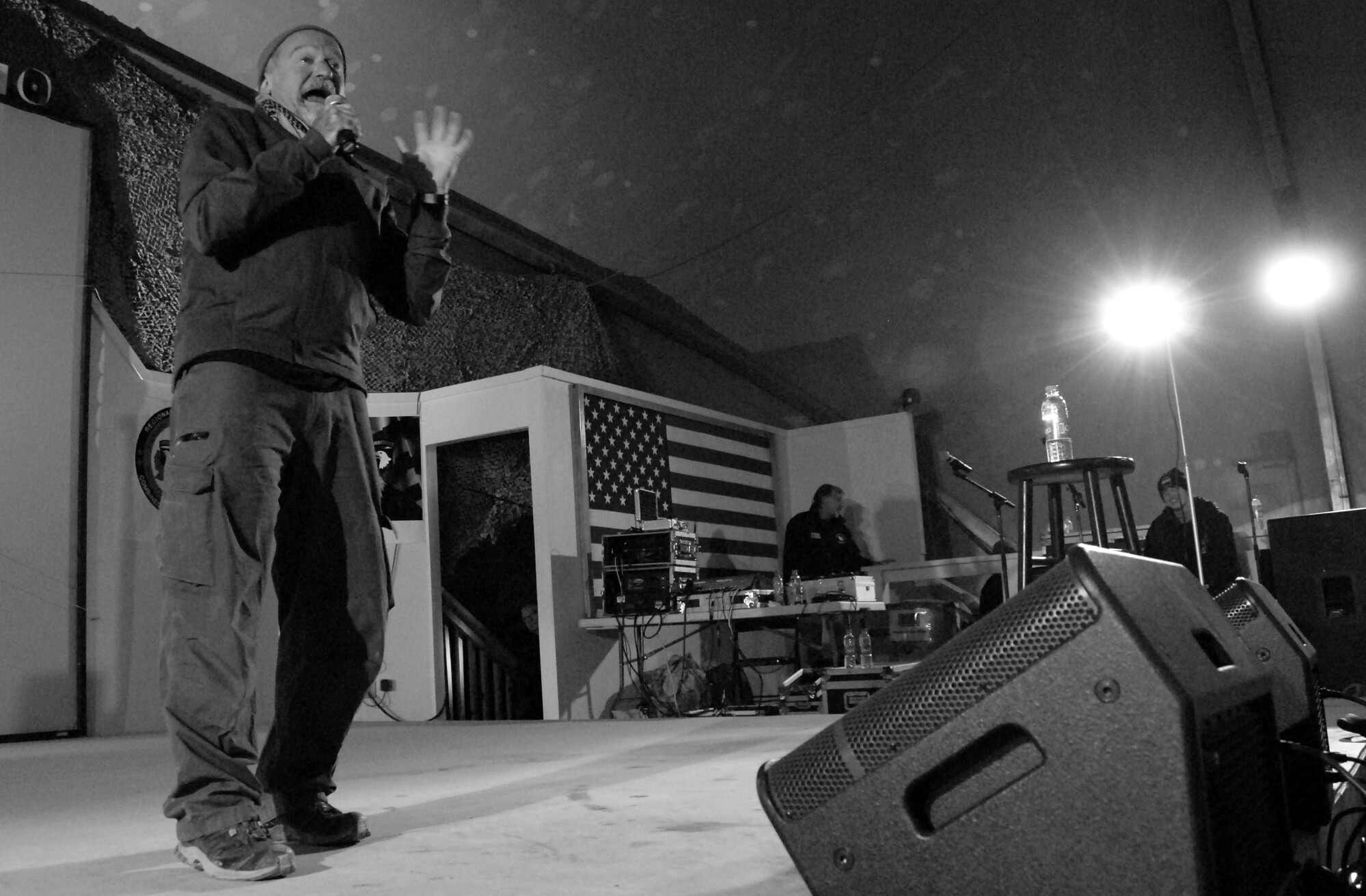
From 2002 through 2010, Williams joined USO tours that brought live performances to service members in the United States and overseas. The USO remembers him as someone who stayed to meet people, take photographs, and make the large event personal. DVIDS records one of those visits at Bagram Air Field in December 2010; the public-domain photograph above comes from that tour.
Williams also co-hosted Comic Relief in the United States with Billy Crystal and Whoopi Goldberg. The Television Academy records that the broadcasts raised money for people experiencing homelessness. A celebrity fundraiser cannot solve homelessness by itself, but sustained attention and fundraising can support organizations doing direct work.
The roles keep speaking
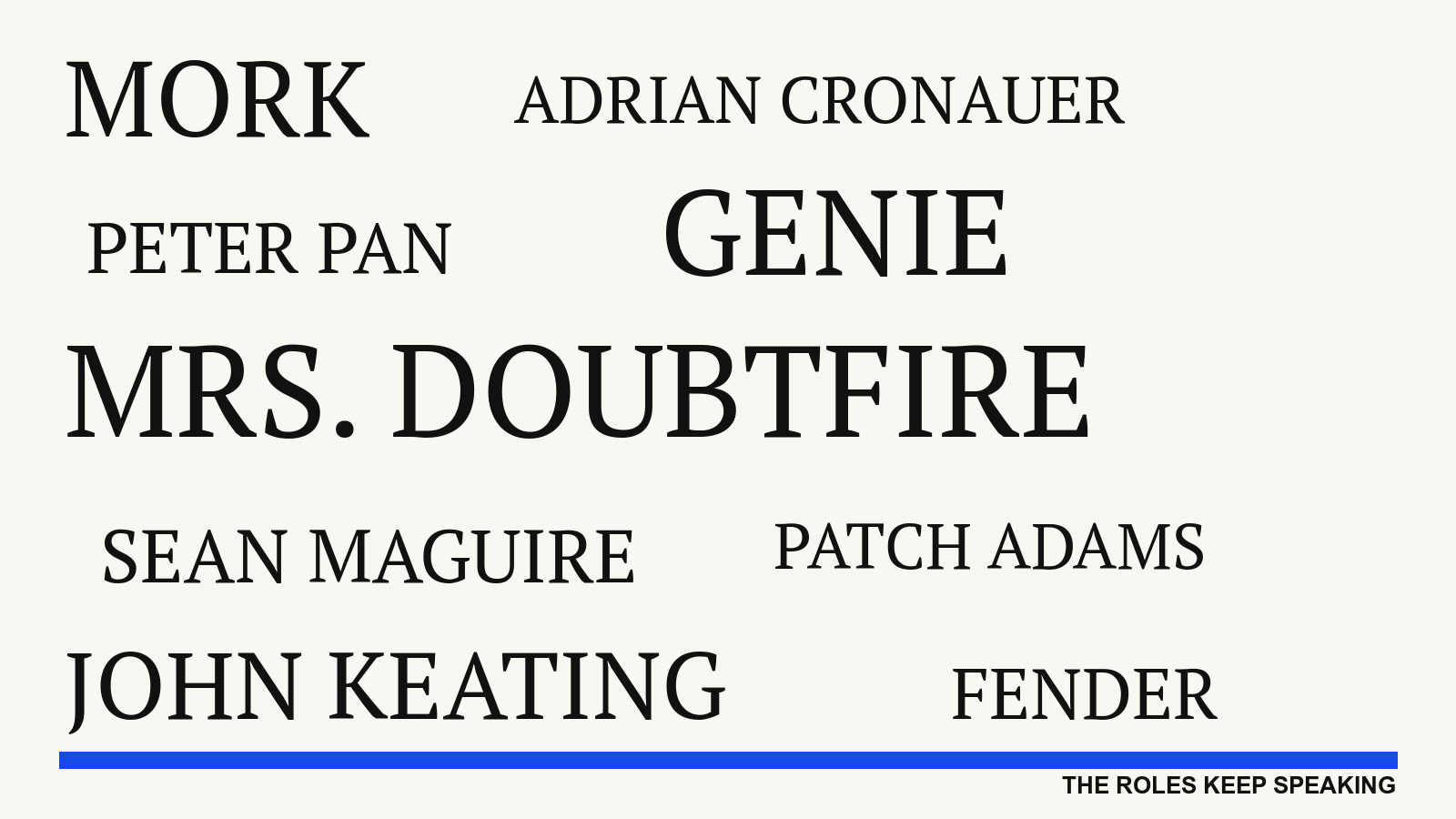
Mork, Adrian Cronauer, John Keating, Peter Pan, Genie, Mrs. Doubtfire, Sean Maguire, Patch Adams, and many more characters offered different kinds of companionship. Some made people laugh at full volume. Others gave viewers language for courage, grief, imagination, or asking for help.
Williams’ legacy is not a demand that pain be hidden behind humor. It is the opposite: a body of work that made room for comedy and sorrow to exist in the same person. The joy mattered because it was given away.