

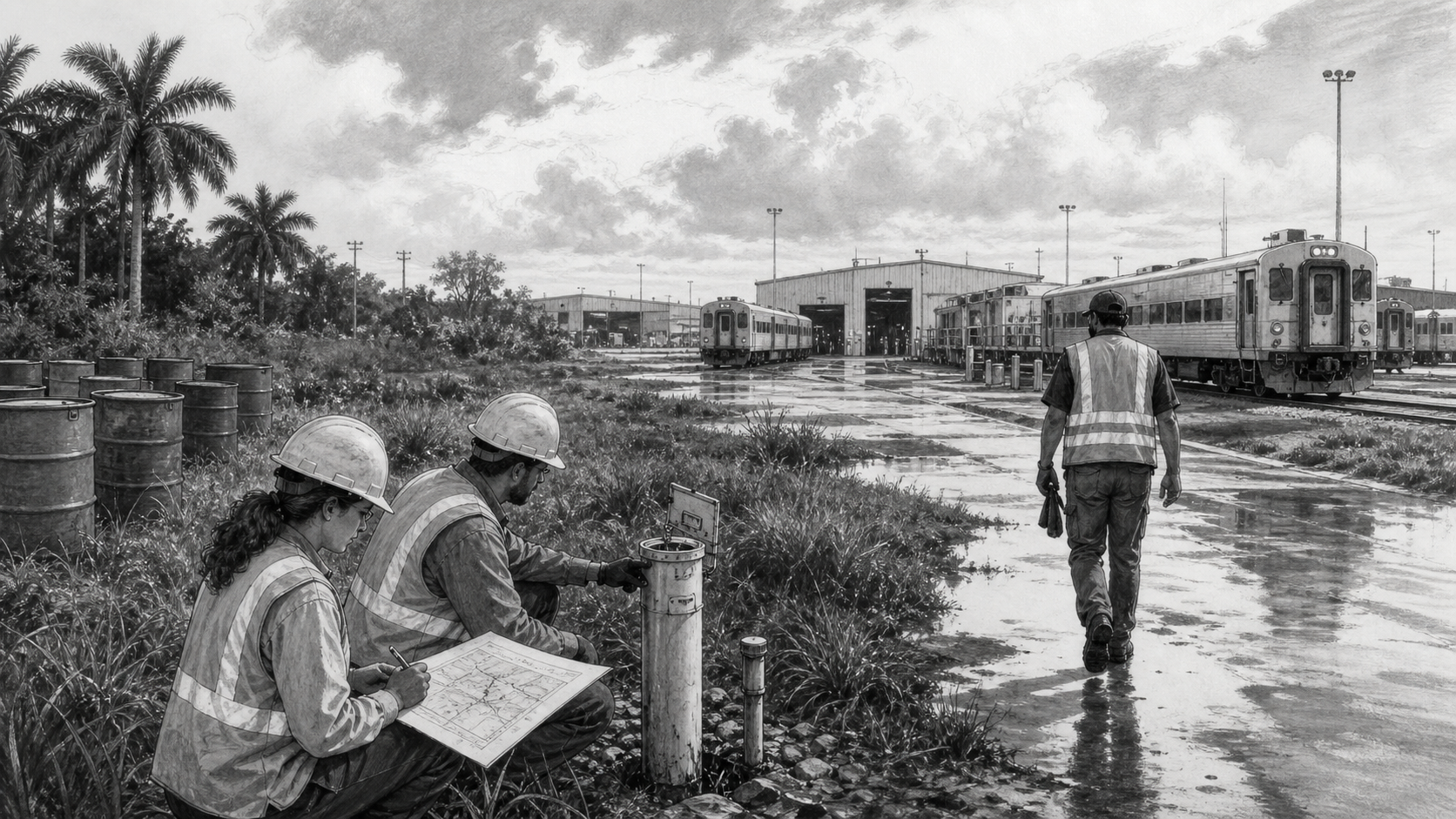
A final cleanup milestone can be easy to miss. There is no ribbon to cut when a contaminated property leaves a federal list. In northwest Miami-Dade County, the more useful evidence is what the land has become: part of an active public train-maintenance complex after more than four decades of cleanup work and oversight.
On August 19, the U.S. Environmental Protection Agency announced the deletion of Miami Drum Services from the Superfund National Priorities List. The final rule took effect August 20, 2026. EPA calls deletion the final cleanup milestone in the Superfund process, but it does not mean that monitoring, maintenance, treatment, or the possibility of future action automatically ends.
From drum cleaning to long cleanup
Miami Drum Services cleaned and recycled industrial drums on the 1.2-acre site from 1966 to 1981. EPA says those operations contaminated soil and groundwater connected to the Biscayne Aquifer. Miami-Dade County forced the facility to close in 1981, and EPA placed the property on the National Priorities List in 1983.
The cleanup was shared work. EPA, the Florida Department of Environmental Protection, and Miami-Dade County investigated the site and carried out the response. EPA’s reuse record says the county and agency removed 15,000 tons of contaminated soil and treated more than 650,000 gallons of contaminated groundwater.
Public work continued around the cleanup
The Miami-Dade County Transit Authority bought the larger property in 1982 and has used it continuously as a train-maintenance yard. The former drum site now sits within the county’s 82-acre William Lehman Operations and Maintenance Center. EPA’s reuse page, last updated in September 2024, said commuter trains using the facility served about 50,000 people each day; that older figure is not presented as a current 2026 ridership count.
That reuse did not wait for one dramatic finish line. Cleanup, monitoring, water treatment, and transit operations overlapped for years. The result is a practical kind of recovery: contaminated land managed carefully enough to remain part of a working public system.
Deletion does not erase the maintenance
Leaving the National Priorities List does not mean every environmental safeguard disappears. EPA’s site profile, accessed August 29, says an operating groundwater remedy addresses commingled contamination associated with the wider Biscayne Aquifer sites. Miami-Dade County continues operating air-stripping towers at the Preston and Hialeah water-treatment plants, with federal and state oversight. Deleted sites can also receive further Superfund-financed action if future conditions warrant it.
The milestone is narrower, and more honest, than declaring the whole problem gone. EPA determined that all appropriate CERCLA response actions required for deletion had been completed while long-term protections continue. Roughly 45 years after the drum facility closed, that is still a substantial public win: the cleanup record advanced, the safeguards remain visible, and the land keeps doing useful work.