
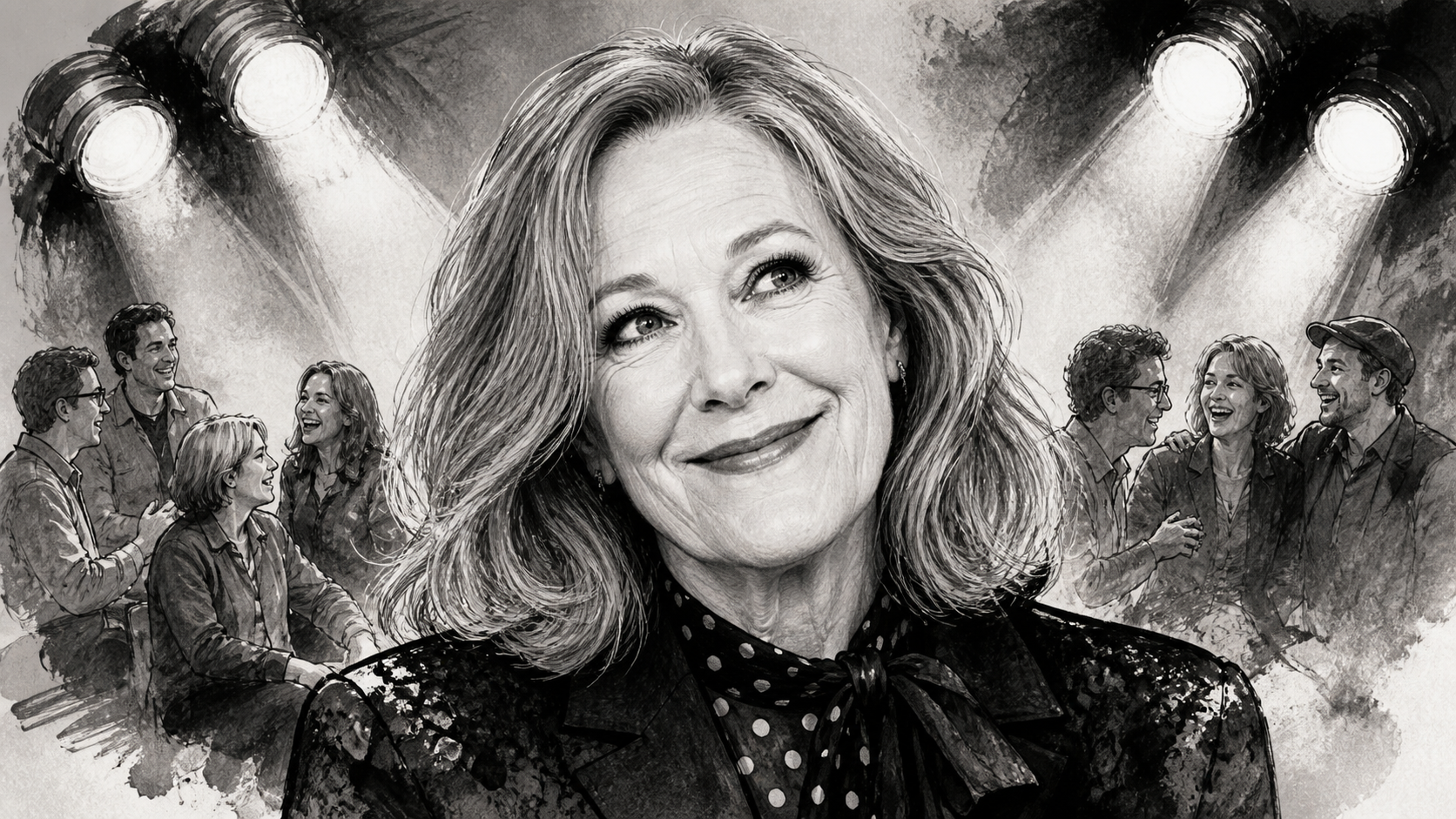
Catherine O’Hara could make a character enormous without making the people around her disappear. She died on January 30, 2026, at age 71. Across sketch comedy, film, and television, her work showed that comic invention is not a solo contest. It is a form of listening, trust, and shared timing.
The intelligence of an ensemble
O’Hara’s early work at Second City and SCTV placed her inside a culture of writing and performance where everyone had to build the scene together. She won an Emmy for SCTV writing, but the deeper achievement was a comic language that remained unmistakably hers while making collaborators better. She could turn one vowel, glance, or sudden posture into a full biography.
That precision traveled across decades. Her performances could be tender, absurd, frightened, vain, or fiercely loyal, sometimes within the same scene. The characters endured because she never treated eccentricity as an excuse to stop observing human behavior. Even at the broadest scale, she found the person inside the bit.
Passing the work forward
Second City remembered O’Hara not only as an alumna but as a member of its Artistic Advisory Board who gave time, insight, and support to the next generation. That contribution fits the method visible in her performances. Good ensemble comedy depends on making room: for another person’s idea, for surprise, and for the possibility that a scene can become more than any one performer planned.
Mentorship is difficult to measure from a tribute alone, and this article does not assign outcomes it cannot verify. The organization’s account does establish something meaningful: after achieving international recognition, O’Hara remained connected to the place and process where artists learn by working together.
Joy with craft behind it
The joy in O’Hara’s work often looked spontaneous because the craft was so exact. She knew when to accelerate, when to hold still, and when to let another actor have the moment. That generosity is one reason colleagues’ tributes have emphasized both her brilliance and her warmth.
O’Hara leaves a library of performances people will keep quoting and rediscovering. She also leaves a working principle: originality does not require crowding everyone else out. The funniest, strangest, most memorable choice can still be an invitation to play together.